
The Potato Incident
How a baked potato became evidence in a decade-long campaign to wear me down

I can eat a potato any way I want, my sister says. She is, of course, referring to dinner at my house ten years ago when my husband allegedly broke her heart by making fun of the way she ate her potato. I have no such memory. Yes, I remember potatoes. Mike grilled steak and I made the potatoes the way I always do—baked at 425-degrees for two hours. Crunchy skin, soft, fluffy innards. We had roasted asparagus that night too, I think.
The only reason my sister mentions the potato is because I unfriended her on Facebook. No, I didn’t unfriend her today. That happened a long time ago, after one too many times she’d taken a post out of context and made it all about her, finding the tiniest, microscopic, non-existent thing to get insulted over.
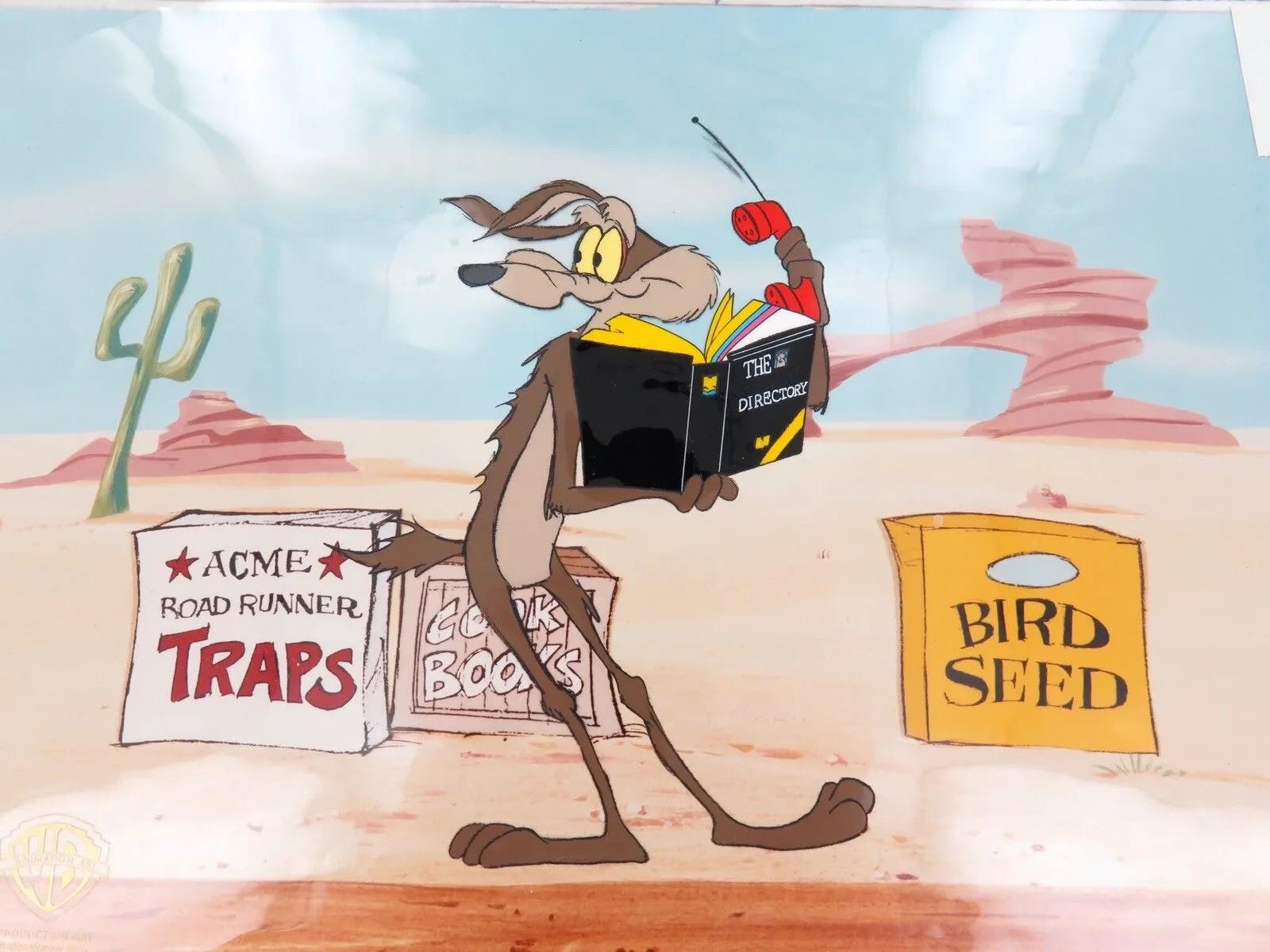
She is like Wile E. Coyote, my sister, in that when her tactics fail to get her what she wants, she doubles down and tries different angles, different approaches. When one approach doesn’t result in my re-friending her, she will try another. Her tactics are becoming less sloppy, less like Wile E. Coyote and his failed ACME gadgets. Now, she is like a cunning wolf. She asks. I say no. She screams and demands I re-friend her. I hold firm. And, as if it’s going to make a difference, she throws in the bit about the potato.
Today, my sister tells me she is finally seeing a therapist. You see, my sister has problems. She sees a psychiatrist and is heavily medicated. But she has refused—for decades—to see a therapist. According to my sister, they’re all evil. She desperately needs to talk to someone. To learn how to regulate her emotional responses to things—and that not everything is about her. My sister tells me, very calmly, very sing-songy, and with bold wolfiness, that her therapist “really really really” wants to know why I unfriended her on Facebook.
I take a deep breath. Lately, I’ve been practicing a boundary-setting strategy called Gray Rock. By responding to a difficult or manipulative person in a calm, neutral, emotionally uninteresting way—like a boring gray rock—you reduce the reward they get from provoking you. No such luck with my sister. I tell her—in my most neutral gray-rocky voice—that I’m proud of her for finally taking the plunge into therapy. That she’s doing the brave thing. That I’m not discussing Facebook.
My sister’s inner wolf explodes into a full-blown effort to wear down her prey. She wails. She rants. She swears. She bares her teeth. She reminds me that she was traumatized ten years ago when Mike made fun of the way she ate her potato. I am about to tell her, for the millionth time, that Mike would never mock her. Then I remember that I’m supposed to act like a boring gray rock. I clamp my mouth shut. A few blissful, silent seconds ensue. Finally my sister growls. Fuck Facebook, she screams, and reminds me that she can eat a potato any way she wants.
What a wise and laugh out loud story. So well written you grabbed me with the first sentence. Now I wish to cultivate a gray rock response for a few people!
Wow. I like your gray rock approach. I think I’ve done that as a kid without even realizing it. Thanks for sharing this tough story.
I have to add that I’m now inspired to try a 425 two-hour fluffy potato 🥔.